Posts

Showing posts with the label Poetry

Alicia Ostriker - A Poet’s Poet and MCLS Book Festival Keynote Speaker

Image
Several years ago, the Mercer County Library System launched a community poetry donation project. As I reviewed the donated books, I noticed a recurring theme in the publication notes: many poets expressed heartfelt gratitude to a particular mentor who had inspired and guided their poetic journeys. The name stood out to me—not just for its frequency, but for its familiarity: Professor Alicia Ostriker, an acclaimed poet and scholar. Her influence and generosity come as no surprise. Years ago, I had the privilege of studying Bible literature under her at Rutgers, where she was a beloved professor of English and Creative Writing for forty years. The class was small and intimate, enriched by lively weekly discussions. She invited us to join her for poetry readings and open mic nights at a local coffee shop, cultivating a warm and welcoming space for budding voices. On the final day of class, she brought wine to celebrate our journey together. It was then that I truly began to pay attentio...

How I Learned to Stop Worrying and Love Poetry

Image
This past April was National Poetry Month. To celebrate, I read three books of poems and have another two checked out to read belatedly. Poetry and I do not have a long history, the way that novels and I do. I’ve been reading for as long as I can remember, and whether that be a family drama, a high fantasy, or surrealist horror, there’s always some novel I’ve been enjoying. Even nonfiction and I have had a relationship, as for the past few years I’ve been getting into reading memoirs and biographies, as well as the odd scientific or historical account. But it wasn’t until the past autumn that a poet friend convinced me to give poetry a go, and I was surprised how fast I’ve fallen in love. Classics like Emily Dickinson, contemporary award-winners like Jericho Brown, even relative unknowns like Sarah Gambito - these are all poets who have begun filling my “Favorite” lists on Goodreads. Chances are, though, that you are not reading any poets, ones I mentioned above or otherwise. You mi...

Book and Whisky Pairings

Image
Some people describe reading as a hobby. Then there are true bibliophiles, for whom literature is an obsession, something without which life is unimaginable. People’s attitudes towards whisky could be categorized these same ways. As literature can be divided into forms and genres, so too can whisky be divided by style. Single malt whisky is distilled exclusively from malted barley. Single pot still whisky is made from a mash of both malted and unmalted barley. Single grain whisky is made from a mash which might include any combination of grain, often corn. And while many American whiskies technically fall into this single grain category, in Ireland and Scotland single grain whisky is typically used for blending with single malt or single pot still to make a more affordable bottle. Single pot still is perhaps the most iconically Irish style, while the best whiskies from Scotland are certainly single malts. If you’re looking for a recommendation from your neighborhood librarian, I espec...

Reading Hawthorne during National Oceans Month

Image
Did you know that Nathaniel Hawthorne wrote poetry? While nearly everyone knows The Scarlet Letter , some readers might be less familiar with his other writings. Hawthorne was actually quite accomplished in a variety of genres. In addition to his novels, which he designated as romances due to their mix of historical, folkloric, and gothic elements, he also produced multiple volumes of short stories, essays, children’s literature (a fairly new genre back in the nineteenth century) and even a biography of his friend, president Franklin Pierce. I’ve admired his short stories for a long time, ever since a teacher assigned reading the story “Young Goodman Brown.” But it wasn’t until recently that I discovered Hawthorne’s poetry. When I did, it felt like uncovering a well-kept secret. I had never heard anyone talk about it, even among poets and librarians. In that spirit, here is a short exploratory reading of Hawthorne’s poem The Ocean, in time, conveniently, for National Oceans Month. Rea...

Shakespeare’s Sonnet 18

Image
May always makes me think of that line from Shakespeare’s Sonnet 18 : “Rough winds do shake the darling buds of May.” In honor of this month, here are my reflections on my favorite parts of that poem. (Here’s a quick refresher for those of us who haven’t been in a high school English class in a while: a sonnet is a poem consisting of fourteen lines, with each line written in iambic pentameter. That means each line is ten or eleven syllables with an emphasis landing on every other syllable. The kind of sonnets that Shakespeare wrote follow a rhyme scheme of ABAB CDCD EFEF GG.) The tonal variance in Shakespeare’s sonnet cycle, of which Sonnet 18 is a part, is erratic. The speaker of the sonnets is sometimes playful, sometimes pensive; at one moment seductive, the next reticent and the next analytical. This variance is on display here in Sonnet 18. The question of the first line can be read as reverent, but it can also be read as flippant, almost whimsical. The speaker may just as much ...

Altered Books

Image
Readers often talk about a book changing their opinions, outlooks or lives. But what if we turn the table and change the book? The process of taking a book and changing it into something else can be fascinating. You could take a book and turn it into a box or a clock or some other object – or you could make its pages tell a completely different story. There are many ways to alter a book. You can treat it as a sketch book and fill its pages with art. Use it as a photo album or scrapbook. I have been working on one that collects quotations about books and libraries and another of mini collages. There are some great classes on CreativeBug – just search “altered books” to find them. YouTube and Instagram are also full of altered book content – so I am guessing that there might be a few altered book enthusiasts amongst our library patrons! I have been thinking about starting an Altered Book Club (or Workshop?) at the West Windsor branch. It would give you (and me!) a chance to meet oth...

Hi It’s Me, I’m The Poet, It’s Me!

Image
Hi, it’s me, I’m a Swiftie, it’s me. This April, Taylor Swift is taking on a new role, The Chairman of The Tortured Poets Department, a nod to her newest album, The Tortured Poets Department . Always happy to dig into the clues that Ms. Swift shares about her work, fans were very quick to notice something special about the release date of April 19th. Yes, it’s National Cat Lady Day, and Swift is a proud “Cat Lady”. But that’s not all - National Cat Lady Day happens to fall within National Poetry Month  “a special occasion that celebrates poets’ integral role in our culture and that poetry matters” established by the Academy of American Poets and celebrated since 1996. As the lyrics to “Mastermind” ask, “ What if I told you none of it was accidental ”? Smart marketing strategy? Likely. Perfect opportunity for Librarians to share poetry related resources? Certainly. So, whether you’re brand new to poetry or just looking for something new, I present to you Databases I’m fairly...

Celebrating Langston Hughes, the Harlem Renaissance Writer

Image
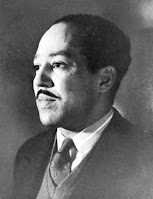
“Hold fast to dreams, For if dreams die Life is a broken-winged bird, That cannot fly. Hold fast to dreams For when dreams go Life is a barren field Frozen with snow.” ― On Dreams by Langston Hughes On February 1 st we celebrate the birthday of our prized Harlem Renaissance author, Langston Hughes, who was born on this day in Joplin, Missouri in 1901. He lived until 1967, passing away in his beloved New York City. Langston is best known as a 20th-century literary innovator who popularized Jazz Poetry and theater which embraced the colloquial language of African Americans. He was controversial for his writing on the very real lives of African Americans and, at the time, literature written in everyday speech was looked down on by many. However, through his writings, he shared with his audience his own struggles and his love of the vibrant cultural life of Harlem. The accessibility of his work has made it popular for acquainting students with the rich literary art of African Ame...

How To Find Poetry and Why You Might Need Some

Image
At the reference desk, I love to hear, “Do you have a poetry section?” We certainly do! I look after the poetry collection at the West Windsor branch, so I love to introduce it to library patrons. I have noticed that, while patrons looking for novels or biographies tend to want a specific book, poetry seekers often want to browse. In the mood for poetry? Here is my guide to browsing. Not all our poetry is in one place. It is mostly in the 800 section of the Dewey Decimal System, and begins in the 808s, which includes anthologies and collections with multiple literary genres. Then, collections by individual American poets are found in 811, organized by last name. 821 is English (and Old English) poetry, 831 German poetry in translation, 841 French poetry in translation. Are you seeing a pattern here? 851 Italian, 861 Spanish and Portuguese, 871 Latin, and 881 Greek and related Hellenic Languages – all in English translation or bilingual editions. Now, Mr. Melvil Dewey was a privileged...

MCLS Poetry Circle Celebrates National Poetry Month

Image
“ When in April the sweet showers fall And pierce the drought of March to the root and all The veins are bathed in liquor of such power As brings about the engendering of the flower; ” April means “to open” in Latin. For most parts of the world, it is the end of winter and beginning of spring. According to Geoffrey Chaucer in his opening lines from The Canterbury Tales  (above), the beginning season of bird singing and flower blossoming enlightens people’s hearts and gives them spiritual renewal. In 1996, the Academy of American Poets with the help of publishers, librarians, poets, and teachers, designated April as National Poetry Month. Since then, April is like a holiday month for many people who love poetry across the United States. MCLS Poetry Circle is a dynamic poetry program that promotes poetry reading and poetry writing at the Lawrence Headquarters Branch of the Mercer County Library System. We have a steady group of avid poetry lovers and poets from Lawrence, West Wind...

The Highest Kind of Poetry

Image
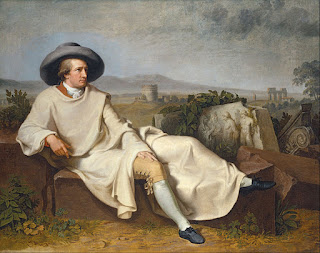
On January 20, 2021, President Joe Biden's Inauguration Day, the twenty-two year old poet Amanda Gorman was invited to read her poem "The Hill We Climb". In a calm and clear voice, the former National Youth Poet Laureate connected millions of people's hearts through those powerful lines: "When day comes, we ask ourselves, where can we find light in this never-ending shade? The loss we carry. A sea we must wade. We braved the belly of the beast. We’ve learned that quiet isn’t always peace, and the norms and notions of what “just” is isn’t always justice. And yet the dawn is ours before we knew it. ... ..." When a poem is recited in front of a worldwide audience through television and the internet, it is a high-profile example of a 21st-century “occasional poem”. When it gives hope to all, unites people from left and right, and has the power to heal different kinds of wounds, it is truly as what the great German poet Goethe declared - "Occasional Poetr...